The goji shrub is also called: barberry, common wolfberry, Chinese wolfberry, wolfberry, and barbarian wolfberry. In China, goji is called 'ningxia gouqi', meaning 'Ningxia wolfberry'. There is even a legend according to which the berry was named after a resident of Ningxia province — Gou Zi.
Saving Lives
A Chinese legend is passed down from generation to generation, its events unfolding back in the 5th century BC. Gou Zi married a beautiful girl but was forced to go to war to protect his native land. In those times, famine reigned in the province and people were dying from it.
Returning from the war, Gou Zi found his wife and mother not only alive but healthy, as if the famine had not touched them at all. He asked how they had managed to survive. His wife told him they were saved by the red berries she collected daily from thorny bushes and used to feed herself and his mother. Those berries were goji berries.
Later, other people learned about them, and the berry came to be called Gou Zi. Thanks to Europeans, its name became 'goji'.

In Mountainous Areas
The plant can be found in the Himalayas, Tibet, Russia, and China. In ancient China, goji berries were actively used to treat liver, kidney, spine, and joint diseases, as well as a tonic and general strengthening agent.
In Europe and America, goji berries began gaining popularity only in the 21st century. They were promoted as a weight-loss tool, a preventive measure against cancer, even as a universal panacea. The secrets of famous Chinese centenarians were associated with them.

An Amazing Fruit
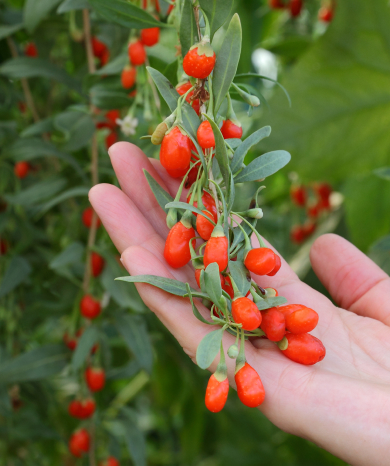
The berries themselves are long, oval, and bright crimson. They are not consumed raw because of substances that can cause poisoning. After drying, these components lose their dangerous properties.
Goji berries cannot be called a low-calorie product — nutritional value ranges from 300 to 350 kcal. In addition to proteins, fats, and carbohydrates, the berries contain a large number of microelements, most notably iron, calcium, and sodium.
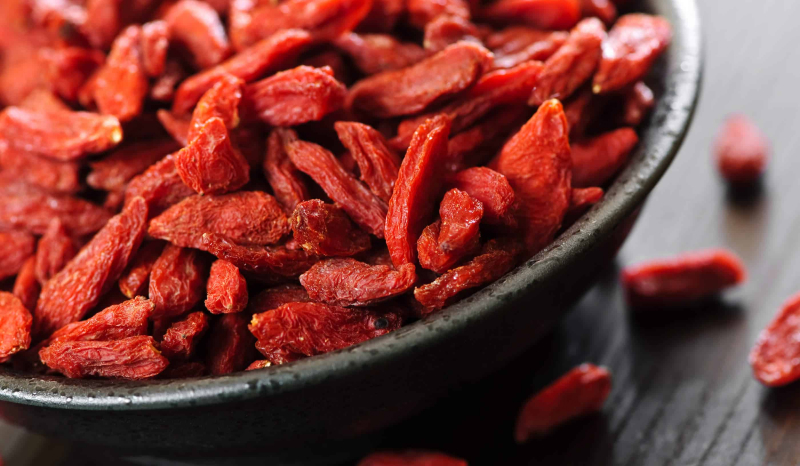
Goji is rich in zinc, iodine, selenium, iron, calcium, phosphorus, potassium, germanium, magnesium, copper, and cobalt. High vitamin C content boosts the body's defenses (2,500 mg per 100 g), beta-carotene helps improve vision, B vitamins improve metabolism, vitamin E promotes rejuvenation, linoleic acid burns fat, and abundant iron helps raise hemoglobin.