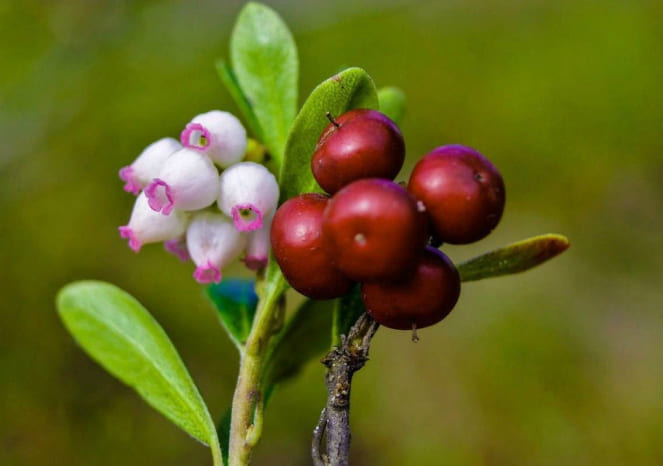
This small shrub with bright red berries, resembling lingonberries, can often be found in coniferous and mixed forests of Northern Europe, Siberia, and North America.
Its fruits are very loved by the largest forest dwellers, which is why the plant received one of its names. Humans, even in ancient times, discovered that the healing power of this plant is concentrated not in the berries but in the leaves, and actively used their unique abilities to strengthen genitourinary health.
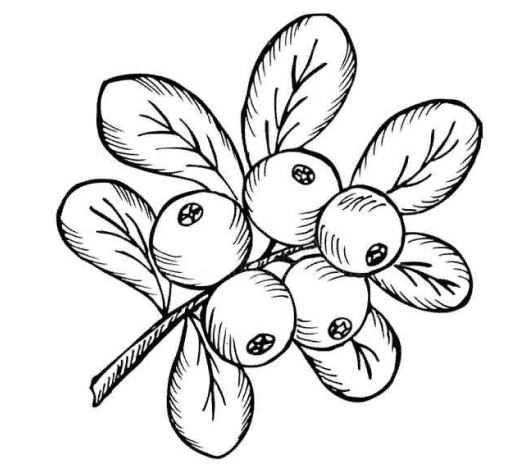
Origin and Name
Bearberry belongs to the heather family and grows at high altitudes in the Northern Hemisphere. Widely distributed in Europe from south to north, from the Iberian Peninsula to Scandinavia. To the east, bearberry can be found all the way to Siberia. While in the south it occurs mainly in mountainous areas above the treeline, further north it is found deeper in the valleys.
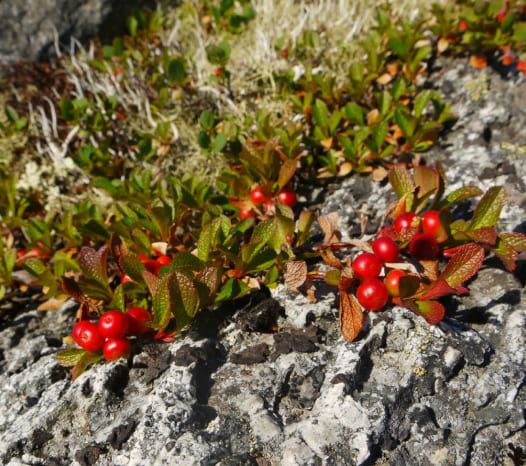
The evergreen dwarf shrub grows to a maximum of 1.5 m and often forms dense carpets of small, leathery, shiny leaves only 3 cm long and 1.5 cm wide. Bell-shaped flowers from white to reddish grow in terminal drooping inflorescences. In late summer they form bright red berry-like fruits with hard seeds.
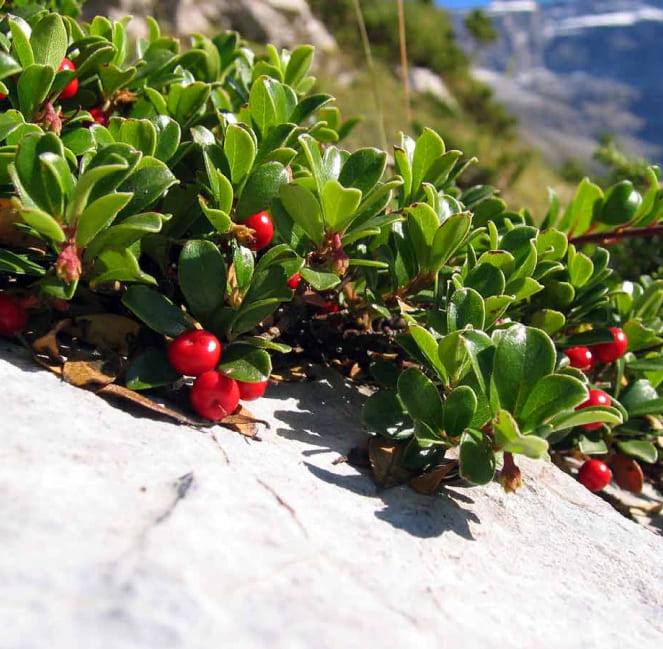
The plant also goes by the name Uva-ursi — in Latin, uva means grape and ursus means bear. No wonder, since these bright fruits are very much loved by many forest dwellers, especially bears!

The history of bearberry's use in medicine dates back at least to the 2nd century, when it was widely used as a diuretic, astringent, and antiseptic. Native Americans used it for headaches, cystitis treatment, and as a general strengthening agent to improve kidney function.

Properties and Uses
Bearberry helps not only with cystitis but also with acute and chronic urinary tract infections. Hydroquinone glycosides — molecules that break down into glucose and hydroquinone in the intestine — are responsible. Hydroquinone is excreted by the kidneys and enters the urinary tract, where it has antibacterial and antiseptic effects, preventing the growth of E. coli, S. aureus, B. subtilis, and other bacteria that cause infections. The plant is also effective as a diuretic.
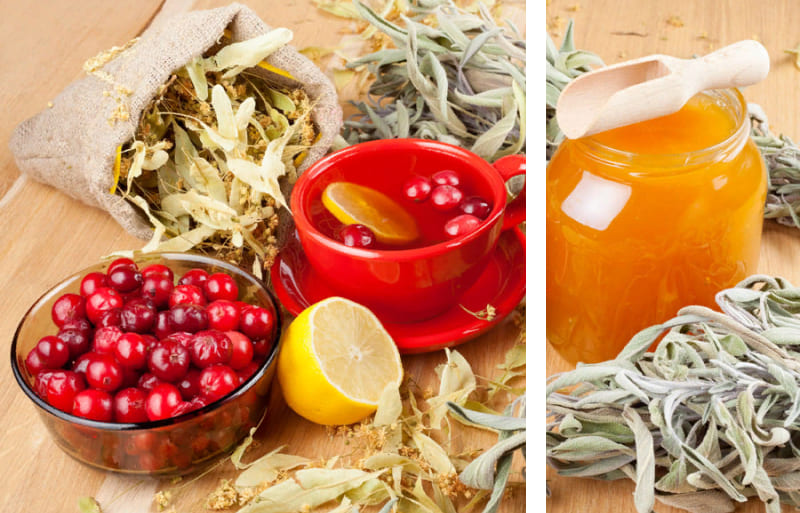
In addition, bearberry contains tannins, flavonoids, phenol carboxylic acids, and triterpenes. Tannins are considered to have antimicrobial and astringent effects.
A study conducted on 57 women showed that those who took bearberry extract for a month experienced a reduction in urinary tract infections. For 12 months after treatment, the women had not a single episode of cystitis — suggesting bearberry gives particularly effective results when taken at the first signs of infection.
Other Benefits
- Strengthening the immune system. The hydroquinone in bearberry is a powerful antibacterial agent that eliminates harmful substances from the body, strengthens the immune system, and protects it from external health threats.
- Detoxification. Bearberry's natural diuretic effect helps cleanse the body by rapidly removing toxins from the kidneys and bladder, allowing the body to continue in optimal mode while eliminating toxins and excess fat, salt, and water.
- Natural cosmetic. Bearberry extract is used in cosmetology for its antibacterial, antioxidant, and anti-inflammatory properties. It also contains arbutin — a natural substance that lightens the skin, giving it a radiant smoothness while eliminating freckles, scars, pimples, and age spots.
Where It Is Found
Bearberry extract is part of the N product from Project V's Classic Hit line. Thanks to the complex action of its natural components, the product helps eliminate the growth of bacteria that cause infectious and chronic diseases of the genitourinary system.
The product is available at all Project V stores. Take care of your health!